One Man's Opinion
Growing up in the ‘80s and ‘90s, we were lucky enough to
enjoy the greatest era of family television ever. There were countless memorable sitcoms in
those years, but for me, one stands out above the rest: Boy Meets World. The show’s charm came from its simplicity—no
gimmicks, just your basic bildungsroman
story with a lovable cast of characters and a lot of laughs along the way.
This blog will feature lots of BMW content as we go,
but in this post I’ll take a look at my Top 10 episodes. I subtitle it “One Man’s Opinion” because our
other blogger (debuting soon!) will likely provide his take at some point in the
future.
Disclaimers: First, the post contains spoiler content, so if
you haven’t seen every Boy Meets World episode, stop reading now (then RUN,
don’t walk, to a store that sells the dvds and immediately buy them all). Second, cutting this list to 10 is EXTREMELY
difficult. I did a first pass and ended
up with close to 30 episodes-worth of “favorites”. I then considered making this a top 25 list,
but didn’t want to water it down. As a
result, some great episodes and true classics are left off—I hate it too, but
that’s the price you pay. Also, all writing is my own but all pictures were found via Google Image, are borrowed and not being used for profit. Thanks to those who provided them.
Anyhow, let’s get down to it!
Honorable Mentions
(Limiting myself to 10 because otherwise I could list them
all): Boy Meets Girl, Danger Boy, City Slackers, The Grass is Always Greener,
Brother Brother, Wheels, A Long Walk to Pittsburgh, Heartbreak Cory, Torn
Between 2 Lovers, Brave New World
10. Cory’s Alternative Friends (s1)
What Happens: After overhearing some of the popular girls
referring to him as “Brillo Head”, Cory becomes self-conscious about his
hair. When his attempt to uncurl it
crashes and burns, he finds sanctuary with some of the other outcast kids in
class, including the free-spirited Topanga.
Eventually he comes to understand and respect the kids who are
“different” and joins them in a protest.
When they succeed, Cory and Topanga share a first kiss.
Why I love it: This episode marks the debut of Danielle
Fishel as Topanga, and she completely steals the show. According to Michael Jacobs on the Season 1
DVD extras, another girl was originally pegged for the role of Topanga, but
when it wasn’t working out, Danielle was given the role at the last minute. She made the most of it by completely
lighting up the screen, and the chemistry between Cory and Topanga is clear
from the very beginning. I suspect that
Jacobs and the producers didn’t have firm plans for the Topanga character
beyond this episode, but it was so clearly a perfect match that they ran with
it later in the season and throughout the rest of the series. The plot teaches valuable lessons about
self-image and about respecting others who march to the beat of a different
drum. It also provides several iconic moments for the series including Topanga’s
performance art routine with lipstick, the kiss with Cory’s Don King hair, and
my favorite of all—Topanga donning Cory’s beloved Phillies hat at the close of
the show as a sign of the enduring connection between the two.

9. 16 Candles and 400lb Men (s4)
What Happens: Cory and Shawn find themselves in a tough
spot: They committed to help their new friend, Frankie “The Enforcer” Stechino
by attending his father’s wrestling match and providing insight. Since Frankie doesn’t know anything about
wrestling, yet has realized that talking about it is the only way he can connect
with his dad, he’s desperate for Cory’s help.
Unfortunately, Cory and Shawn learn that Topanga’s Sweet 16 is scheduled
for the same night and time as the wrestling match and she’ll be crushed if
Cory isn’t there. Shawn hatches a plan
to make Cory seem to be in two places at the same time by running back and
forth between the two events. In all the
chaos Cory eventually misses a key part of Topanga’s party but is able to make
it up to her.
Why I love it: Simple, light-hearted fun. This episode illustrates the formula that
made the show very successful in its early years: Cory and Shawn find
themselves in some crazy predicament, hatch an absurd plan that has virtually
no chance to succeed and that will have humorous consequences, and end up
failing but learning something along the way.
Most of the other episodes on this list are a little more “serious”, but
the vast majority of Boy Meets World episodes were light-hearted and fun. This one is included in the Top 10 not just
because it was very entertaining but also as a proxy for all the other
not-so-serious and lovable episodes through the years. Also, Danielle Fishel as Topanga is really at
her finest here. I think if you were an
adolescent boy in the ‘90s it was almost impossible not to love her,
particularly in Season 4 and this episode.
8. Teacher’s Bet (s1)

What happens: Cory naively assumes that teaching is easy
because you have the answers, prompting a bet with Mr. Feeny: Cory will teach
one class (History) for a week, and if more students than normal pass the test,
Cory gets 1/5 of Feeny’s paycheck.
However, if less students than normal pass, Feeny gets Cory’s new
bike. Cory at first takes his
responsibility lightly, inviting the class to call him “Hey Dude” and letting
the students do whatever they want. But
when a racial incident affects Eric’s Asian girlfriend, Cory’s eyes are opened
to the realities of racism in the world even today, which helps drive home the
message of the book the class is reading—The Diary of Anne Frank. He takes a new, serious approach to his
teaching, but comes to realize how difficult it can be to get through to
students. In the end, the number of
students that pass is the same as usual and so the bet is a draw, but some
students—including Shawn—score much better than usual. Not only does Cory get a valuable lesson on
discrimination, but he also gains a new respect for teachers and all the
challenges they face.

Why
I love it: In my second post on this blog, “Television in the Golden Age”, I
waxed poetic about the ability of ‘80s and ‘90s shows to make you laugh but
also teach you an important lesson.
“Teacher’s Bet” is a perfect example of Boy Meets World’s ability to
strike that balance. A viewer can’t help
but crack up at the sight of stodgy old Mr. Feeny walking into the classroom
dressed like a teenager and saying “Hey Dude, sorry I’m late. I was chillin’ with my homies.” But then, just a few moments later, the mood
is completely changed when Cory directs an ethnic slur at Shawn to prove a
point about racial and ethnic bias. The
absurdity around Cory teaching the class and his classmates’ behavior in a
classroom without rules provide a lot of levity to this episode. But the real beauty of it is watching a young
Cory acquiring a life lesson about racial and ethnic bias, both from reading
the Diary of Anne Frank and from Eric’s girlfriend’s experience. The ability to seamlessly blend serious and
comedic storylines into a single lovable and memorable episode is a hallmark of
Golden Age tv, and Teacher’s Bet is one of Boy Meets Worlds finest
contributions.
7.
A Kiss is More than a Kiss (s3)
What
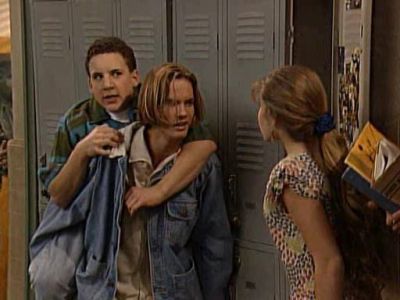
Happens: After a mutual breakup a few weeks earlier, Cory and Topanga have
maintained a close friendship, including planning to appear at a school fashion
show together (which they had signed up for while they were still dating). At Shawn’s behest Cory begins to date other
girls, but he is hesitant to make any physical contact because his heart is
still with Topanga. Just when Cory
decides to tell Topanga how he really feels, he finds her at Chubbie’s making
out with another guy from school and is devastated. Feeling jealous, alone and frustrated by his
inability to do anything about it, Cory then tells Topanga that he doesn’t even
care to be friends with her anymore. But
when the time comes for the big fashion show, Cory shows up as promised and he
and Topanga agree to stay friends.
Why
I love it: There are a number of BMW episodes that do an excellent job of
conveying the pain that can come with being young and in love. I just as easily could have put the break-up
episodes in this slot, either season 3’s “The Grass is Always Greener” or
Season 5’s “Torn Between Two Lovers”, and both would have been worthy Top 10
picks. But I’m particularly fond of this
one because I think Ben Savage does a great job conveying the pain of seeing
someone you love sharing something that feels like it should be “yours” with
someone else. When he asks “Why doesn’t
Topanga just rip my heart out and stomp on it?” and when he later makes his “I
don’t want this!” speech, I think it shows how painful it can be to have your
heart broken while growing up. Of
course, by going to the fashion show with Topanga , Cory shows a lot of
maturity. Like many people with broken
hearts, Cory can’t necessarily forget or immediately get over the pain, but he
can act like a gentleman and try to go on with his life—a hard, but valuable lesson
that many teens learn.
6.
Resurrection (s6)

What
Happens: The newest member of the Matthews clan, baby Joshua, is fighting for
his life. Born premature, he has a bad
respiratory infection that keeps him in an incubator. While Alan and Amy hope and pray, Cory works
to convince himself that everything will be alright. Topanga grows frustrated with Cory’s
unwillingness to acknowledge or prepare for the possibility that Joshua may not
make it, leading to a disconnect between the two of them. Cory wants Topanga to make everything all
better, but Topanga thinks it’s unreasonable for Cory to expect her to change
the reality of a potentially terrible situation. Just then, Shawn makes a surprise return,
after taking to the road to find himself several weeks earlier after he lost
his father. Shawn does what Topanga
won’t and assures Cory that everything will be fine and lightens his mood by
talking about how much fun they’ll have with Joshua as he grows. Soon, Alan refers to Shawn as a part of the
Matthews family, and Shawn makes an impassioned speech to Joshua in the
incubator, telling him that he needs to stay here with all the people who love
him—a lesson that Shawn learned on the road.
Joshua makes a full recovery, and Topanga makes a return to her
free-spirited and optimistic roots.

Why
I love it: This is one of the best episodes for Shawn in the series. “We’ll Have a Good Time Then”—the episode
where his father Chet passes, which aired one month before “Resurrection”—was
such an emotional episode for Shawn and a major tear-jerker for viewers. When he took to the road to find himself, you
didn’t know what might happen to him but you knew he was in a very dark
place. Seeing him come back to the very
same hospital, in good spirits, and make a powerful speech to Joshua about
living and growing with the Matthews family is a beautiful moment. It shows that he’s found some closure and
that he realizes that even though his biological family is mostly gone, the
Matthews are his family too. In
particular, my favorite moment of the episode (and one of the best of the
series) is when Topanga angrily tells Cory that “NOBODY can make this better”,
and just at that moment the elevator opens and Shawn arrives and does just
that. It’s like Cory is on the brink of
a bad place, and as his oldest friend, Shawn knows exactly what to do to rescue
him from that place. At the same time,
by welcoming him into their family and supporting him completely through tough
times, the Matthews family rescues Shawn from the bad place he had fallen into
after Chet’s passing. The “circle of
life” aspect, with Joshua entering the world in the same place where Chet
passed on just a few weeks earlier is very cool. Also, I’m a big fan of “throwbacks” where the
writers give a wink and nod to the fans who’ve been around from the beginning,
and the homage to “Cory’s Alternative Friends” with Topanga’s lipstick bit and
Shawn’s “Use a mirror babe” line were the cherry on top of a great
episode. As Topanga says, “No matter how
difficult life gets, the important thing is to live it with hope.”
5. The Eskimo (s5)

What happens: As
graduation approaches, Shawn and Cory have caught a classic case of
“senioritis”. Shawn in particular is
slacking off on his assignments and has come to believe that it’s impossible
for him to go to college, even though Cory filled out his applications for him. Frustrated by their apathy, Mr. Feeny gives a
unique assignment: Shawn must get 2 tickets to the Super Bowl by the end of the
week, Topanga must butt out of other people’s lives, and Cory must help them
both. Shawn enters a contest where he
has to stand atop a billboard in the freezing cold and outlast 9 other people
to win tickets. He makes it to the last
2, but gives up because the other finalist is an Eskimo who is completely
comfortable in the cold. Eventually
Shawn comes to realize that the Eskimo is a metaphor for all the things that
stand in the way in his life, like being poor or having a dysfunctional
family. He decides that he is his own
worst “Eskimo”, and that people like him don’t go anywhere because they don’t
believe in themselves. He resolves to
get into the Super Bowl, despite not having tickets or a way to get there. Cory reluctantly gets out of Shawn’s
way. In the end, Mr. Feeny gives both
Cory and Shawn A’s, because they learn the lesson at hand—that Shawn needs to
want things for himself, and that it isn’t enough for Cory to want them for
him. While watching the game, Mr. Feeny
spots a boy in the crowd holding a sign that reads “Hey Feeny—Nothing’s
Impossible.”

Why
I love it: The very last scene, after the final commercial break, is one of the
show’s best. Knowing that despite all
the adversity Shawn found a way to get into the game is definitely a warm-fuzzy
moment. This episode is also vintage Mr.
Feeny, giving an assignment that makes little sense on the surface but that
ultimately illustrates a point that’s bigger than the classroom. I love the message too—if you believe in
yourself, you can do anything you want to.
4. What I Meant to Say (s3)
What happens: Cory gets caught up in the moment and tells
Topanga that he loves her, even though they’ve only been formally together for
a few weeks. Topanga is afraid of such
feelings considering their young age, and breaks up with Cory as a result. Meanwhile, Shawn, Eric and the guys at John
Adams High are angry with Cory for being so open, as their girlfriends will now
expect an “I love you.” Cory and Shawn
try to figure out why Topanga reacted the way she did, but it isn’t until he
has a pep talk with the new teacher Mr. Williams that Cory decides to go ask
Topanga for the real story. When he
explains to Topanga what he meant when he said he loved her, she realizes she
feels the same way. Cory lets Topanga
keep his jean jacket as a sign of their love.
Why I love it: This episode has so many good things going
for it and really highlights Boy Meets World’s ability to blend comedy with
sentimental moments. Three funniest
scenes (and there are many):
- Shawn talks about getting
hit in the butt by a dart and Cory replies simply, “Lot of sick people out
there man…” (Cory had thrown the dart, but wasn’t aware that it hit Shawn)
- Mr. Williams concludes his
introduction speech by saying “There’s a difference between what they say
and what is real.” Mr. Turner asks
Shawn what Mr. Williams just said and Shawn guesses “….something about
Israel?”
- Shawn takes a bouquet of
flowers from Cory and to get rid of them, hands them to a big jock in a
varsity jacket who smiles with appreciation. Later, when Cory and Shawn are
recreating what happened on the night Cory told Topanga he loved her, the
jock sees them together and is jealous that Shawn is being so intimate
with another man, and throws the bouquet down in disgust.
In addition, this episode
introduces one of my favorite secondary characters in the series, Mr.
Williams. Despite having a limited run,
he’s probably one of the funniest characters on the show. Finally, this episode has a really nice
storyline for Cory and Topanga, culminating with the jean jacket toss which is
one of the iconic moments of the great Cory/Topanga relationship.

3. The Happiest
Show on Earth (s3)
What happens: Cory
is still in love with Topanga and resigns to win her back. When Topanga wins an essay contest and gets
to go to Disney World, Cory fears that she’ll end up falling for Ronnie “Lips”
Waterman, a smooth talker and heartbreaker from class. Shawn and Cory hatch a plan to get to Disney
World while Eric covers up for Cory’s absence.
In Florida, Topanga resents being chased so hard by both Cory and
Waterman. She thinks Cory really came to
Disney to be with another girl, Kristin.
When Topanga overhears Cory having a heart-to-heart with a visiting Dana
from Step-by-Step and then a dolphin in the aquarium at Epcot, she realizes how
he truly feels. They share a dramatic
kiss in front of Epcot’s iconic “Spaceship Earth” and get back together.

Why I love it:
Ah, the Disney episode. All of the great
family sitcoms on ABC in the Golden Age had their Disney episode, but Boy Meets
World’s was really a classic as it had so many of the elements of a great BMW episode. You’ve got Shawn and Cory teaming up to go on
a wild goose chase through “The Happiest Place on Earth”. You’ve got big brother Eric supporting and
covering for Cory by using a dummy look-a-like which is good for a lot of
laughs. Most of all, you’ve got the
moment that we’d been waiting for all season as Cory and Topanga finally get
back together. It’s a great scene and a
classic moment in the greatest tv relationship of the era, and
serves as the capstone to one of the most memorable episodes of the series.
2. Things Change (s5)

What happens: As
senior year draws to a close, Cory’s world teeters on the brink of chaos. He, Angela and Topanga are all accepted to a
local college called Pennbrook, but Shawn gets waitlisted. Cory tries to convince other kids at school
to turn down Pennbrook to increase Shawn’s odds of being admitted, and it
works. But Shawn shocks Cory and
everyone by saying that he intends to turn Pennbrook down in order to pursue a
job as a photographer’s assistant. Cory
tries to talk Shawn out of it, recruiting Jack and others to help, but to no
avail. While Cory is distracted with
Shawn, Topanga wrestles with a decision of her own: she received an acceptance
letter from Yale, to which she applied when she and Cory were broken up. Cory had been so preoccupied with Shawn that
he is blindsided when Topanga tells him she is considering going. For their part, Alan and Amy Matthews have
recently announced that they’re having a fourth child, and they’re making plans
to redecorate Cory’s room for the new baby.
Feeling that everything around him is falling apart, Cory seeks advice
from Mr. Feeny, who then tells Cory that he is retiring to Wyoming at the end
of the school year.
Feeling scared
and alone, Cory finally finds some solace in the form of his younger sister
Morgan, who seems to be the only person in his life not changing. They head to Chubby’s for a burger, but Cory
quickly finds out that his childhood hang out has been sold and is now a pirate-themed
family restaurant. Near the end of his
rope, Cory has a talk with Eric and starts to come to grip with his
situation. While he may not agree with
everyone’s decisions or like their consequences, he understands that it may be
impossible for things to stay the same forever, and he can’t live in fear of
change. The episode ends with Eric going
to visit Mr. Feeny, his mentor, to plead with him not to go.

Why
I love it: To me, this episode is the show in a nutshell. Growing up is change. You’ll make close friends, you’ll fall in
love, you’ll have family members and teachers who care for you and give you
everything they possibly can. But eventually
there comes a day when—through no fault of your own—fate throws a monkey wrench
into everything that was comfortable and everything changes. Naturally, this can be very scary, but in
time we usually come to realize that everything happens for a reason. Change is inevitable, but if you have family
and friends who love you, everything will be alright in the end. To quote Cory
himself 2 seasons later,
“Even though it may seem that the world is going out
of its way to teach you these hard lessons, you’re going to realize, it’s the
same world that gave you your family and your friends… and you’re going to come
to believe that the world is going to protect you too.”
Boy Meets World at its finest.
1. Starry Night (s5)
What happens: Cory and Topanga have been broken up for
several weeks after Cory’s feelings for a girl named Lauren changed Topanga’s view
of their relationship. A new exhibit has
brought Vincent Van Gogh's art to Philadelphia, most notably a piece
called “Starry Night”. Topanga was
supposed to see the exhibit with Cory, but since they broke up she goes with
Angela instead. While there, the two
meet a smooth-talking artist named Ricky Ferris who knew Topanga many years ago
and who walks the gallery with Topanga before asking her out. Intrigued but confused about moving on,
Topanga finds Cory and takes him to see Starry Night, needing to know how he
feels about it before she can decide on Ricky.
But all that Cory can see in the painting is pain and despair, since
that’s all he feels inside. Topanga
clues him in that Starry Night is a masterpiece, but all Cory can think about
is their relationship, and so he replies “No, WE’RE a masterpiece!”
 Topanga decides to go on the date with Ricky, and when Shawn
finds out, he too thinks it’s over for Cory and Topanga. This makes Cory the last man on earth to
still believe it will work out—a position that he embraces, since he is so sure
he is correct. Topanga goes to dinner
with Ricky and enjoys it; but when she kisses him at the end of the night, she
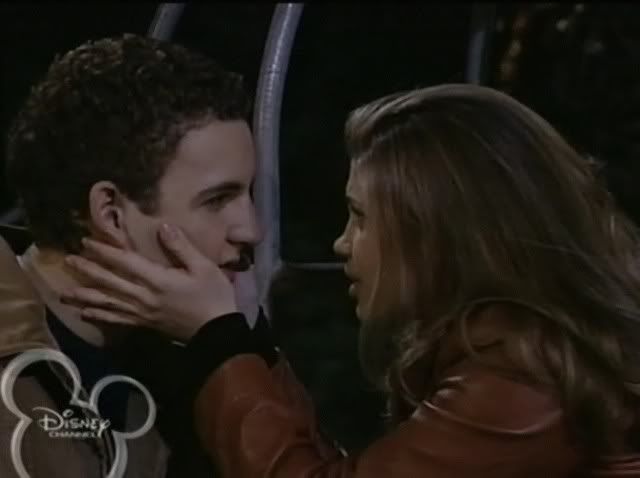
feels nothing and realizes that Cory Matthews is the man for her. She and Cory meet under the stars on the
playground, where they first met as small children, and profess their undying
love for one another once more. The
episode ends with Shawn and Angela, who look at several paintings only to give
each other passionate kisses, before coming to Starry Night and stopping to
ponder its beauty together.
Why I Love It: Call
me a softy, but I’ve always loved this episode of Boy Meets World as much as
any episode of any television show.
After a very compelling breakup storyline over the previous few
episodes, we finally see the reunion of Cory and Topanga. The use of Van Gogh’s Starry Night gives the
episode a unique artistic quality that you don’t find in many other Golden Age
sitcom episodes. The "magnum opus" of
Vincent Van Gogh, one of the greatest painters in history, the painting
provides a magnificent backdrop and a sort of symbolism for the events of the
episode. While no one truly knows what
Van Gogh was thinking as he looked out his sanitarium window at the village
below and painted Starry Night, I think Topanga’s interpretation that it
represents a village where the people live in peace and where they look up at
the sky and know God’s love for them is as valid as any.
Ultimately the episode stands as a testament to one of the
greatest relationships that a generation ever knew. Maybe they weren’t quite Romeo and Juliet,
but for our generation, Cory and Topanga were the epitome of true love. Even though he made mistakes, Topanga never
gives up on Cory, and for his part, Cory never loses faith in his relationship
with Topanga, even when everyone else had given up on them ever getting back
together. The scene on the playground—where
it all began for Cory and Topanga—is set under the stars, paralleling the theme
of Van Gogh’s painting. And as Cory and
Topanga reunite, they look to the stars above and they know that everything
will be alright.
There
is only one word that can accurately describe this “magnum opus” of Boy Meets
World—masterpiece.
So, there it is--GA4K's Top 10 Boy Meets World episodes.... Well, my opinions at least. Even though it was tough to cut so many episodes,
writing this post has reminded me how amazing these 10 episodes were, so no
regrets. That said, we’d love to hear
which of these were your favorites or which episodes that were left off should
have made it. Comment here or tweet us
@GoldenAge4Kids.